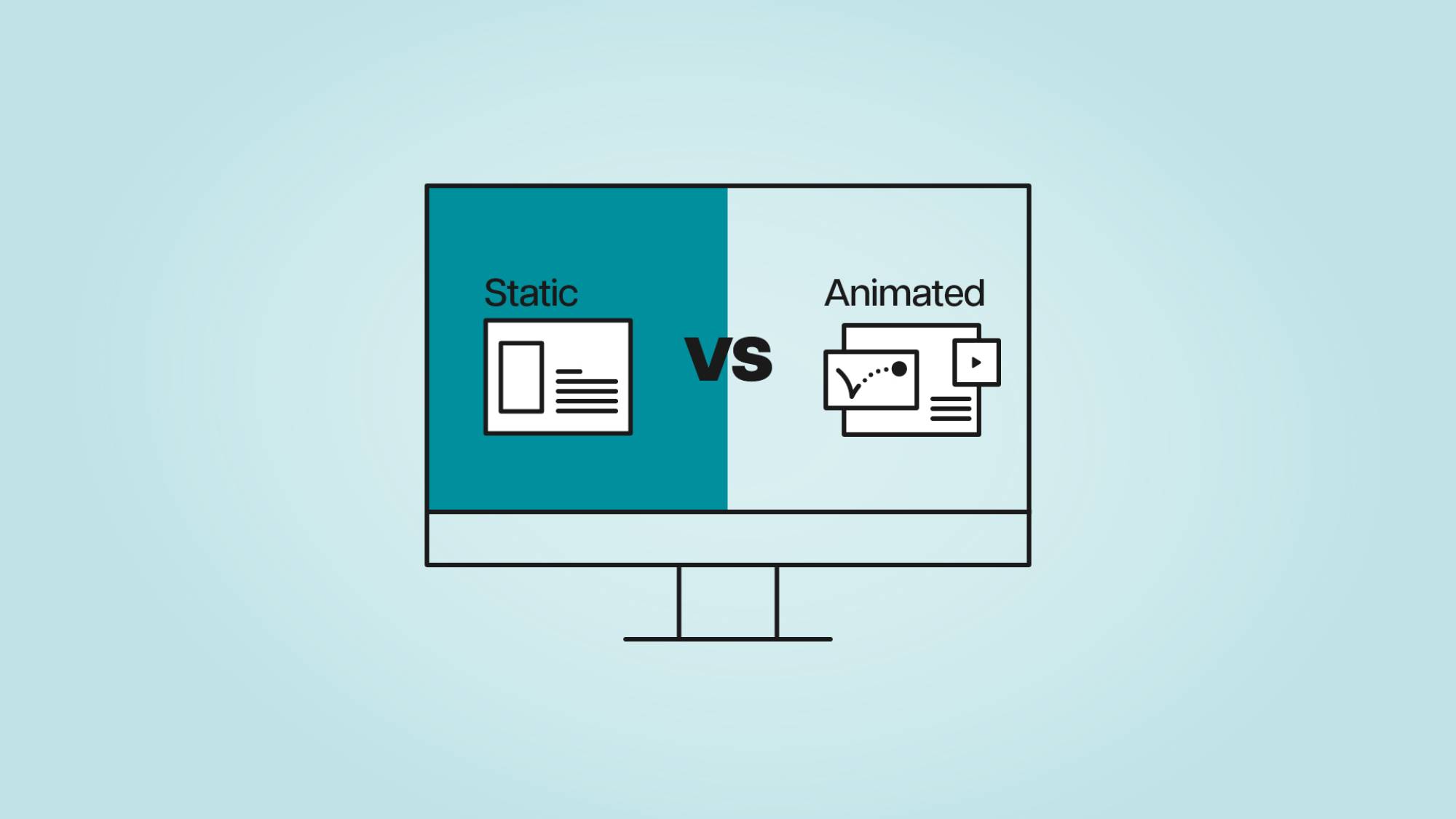
Animation vs Static - What actually works in 2026?
Introduction
In a digital world where users scroll through content at lightning speed…standing out matters. Studies show that animated content captures attention faster and often drives higher engagement than a static image. Short-form video alone (what we know as reels) dominates all social feeds, with platforms prioritising motion content in their algorithms.
But here’s the part that many people overlook: static content still converts exceptionally well.
While animation grabs your attention, static often delivers clarity, speed and performance - especially when users need information quickly, or are about to make a decision. So the real question in 2026 isn’t ‘animation or static?’ - it’s knowing when to use each.
What is Static & Animation?
Static Content | Animation Content |
Images, graphics, carousels and infographics | Video, GIFs, motion graphics and animations |
Delivers instant messaging | Delivers storytelling and movement |
Fast to create and easy to distribute | Immersive and attention-grabbing |
Lower production costs | Usually needs more time and resources |
Great for quick consumption | Good for deeper engagement |
Performs well for announcements and performative marketing | Performs well for awareness and brand-building |
Both formats serve different purposes - and both are valuable when used strategically!
Key Differences
Attention and Engagement
Animation is designed to interrupt the scroll and grab your attention, whereas static is designed to deliver information quickly.
According to an Adelaide Business School study, animated content can increase engagement by up to 50% compared to static content, particularly on platforms like LinkedIn, Instagram and TikTok (source). However, engagement doesn’t always equal conversion.
A simple way to put it is animation wins attention, and static wins speed and clarity.
Messaging and Communication
Animation works best when there is a story to tell or a process to get into. However, static content excels at delivering direct, concise messaging such as statistics, announcements, promotions, and key messaging.
If the audience only needs a couple of seconds to understand the message, static is often the best option.
Time & Cost
Static content is usually quicker and more cost-effective to create.
A branded graphic or carousel can often be created within hours, making it useful for when you need something out ASAP or to fill content gaps. Animation can require editing, motion design, audio decisions and a longer approval process.
That additional investment of time on an animation can deliver strong results, but only when the format supports the overall objective.
Platform Performance
Different platforms favour different content formats.
Short-form animated content performs well on… | Static content is highly effective for… |
Tiktok videos | TikTok Carousels |
Linkedin video | LinkedIn carousel posts |
Instagram and Facebook reels | Infographics |
Youtube shorts | Email marketing |
Stories across social platforms | Website graphics |
The highest-performing brands rarely rely on a single format. Instead, they utilise both depending on platform behaviour and campaign objectives!
SEO and Website
Static visuals have a major advantage when it comes to website speed and performance. Videos or animations can affect loading times and mobile performance, and increase bounce rates. Static imagery is lighter, faster and often easier to optimise for SEO. That doesn't mean animation hurts overall performance - it just has to be planned strategically and implemented properly.
When To Use Animation
If you’re explaining a product or service
You need to stop the scroll
Brand storytelling
Launching something new
Driving higher engagement
When To Use Static Content
Quick turnaround content
Performance marketing
Sharing data and insights
You need scannable content
Conclusion
The biggest misconception in content marketing is that one format is replacing the other.
It isn’t.
The strongest brands in 2026 aren’t choosing between animation and static; they’re using both intentionally. The real advantage comes from understanding what your audience needs in that specific moment. Because ultimately, it’s not animation vs static. It’s using the right format for the right objective.
Dynam has a team of designers and animation experts to help brands utilise both. Discuss your next project with us: [email protected]
Related articles
-
design
![]() How Scotland Affected Marketing & DesignRead the four ways that Scotland has influenced modern marketing and design…
How Scotland Affected Marketing & DesignRead the four ways that Scotland has influenced modern marketing and design… -
design
![]() How Fear Can Lead To Creativity And Generate IdeasDynam attended the seminar ‘Fearless Will Lead to Immortality’ by John-Paul Hughes, the Group Creative Director for Communicorp UK. Read more about how channeling fear can lead to creativity.
How Fear Can Lead To Creativity And Generate IdeasDynam attended the seminar ‘Fearless Will Lead to Immortality’ by John-Paul Hughes, the Group Creative Director for Communicorp UK. Read more about how channeling fear can lead to creativity. -
design
![]() International Artist Day 2018It’s International Artist Day! We asked a few of our designers to name some of their favourite inspirational artists. Here are their choices - it’s quite a selection!
International Artist Day 2018It’s International Artist Day! We asked a few of our designers to name some of their favourite inspirational artists. Here are their choices - it’s quite a selection!